
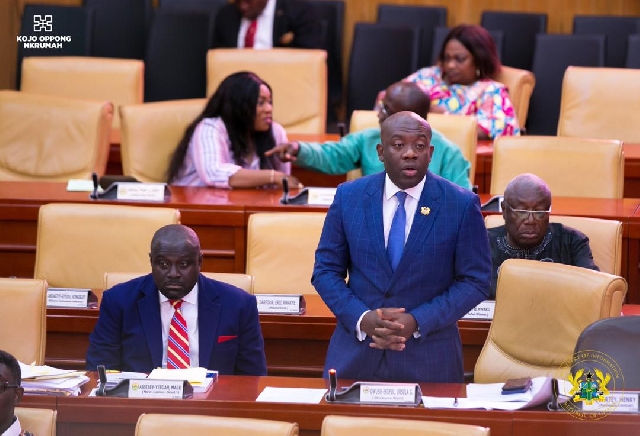

Former Minister for Information and Member of Parliament for Ofoase-Ayirebi, Kojo Oppong Nkrumah, has called for a comprehensive overhaul of Ghana’s youth employment strategy, warning that skills training programmes without corresponding job opportunities risk creating frustration among young people.
Speaking at a public forum on youth development and economic empowerment, Oppong Nkrumah stressed that while vocational training, technical education, and skills development initiatives are important, they must be linked directly to employment opportunities and sustainable economic growth.
According to him, successive efforts to equip young people with skills have often fallen short because many beneficiaries struggle to find meaningful employment after completing their training. He argued that this disconnect between training and job creation undermines the effectiveness of youth empowerment programmes and contributes to growing unemployment.
“Training people without creating jobs for them only breeds frustration,” he said, emphasizing the need for policymakers to focus on building industries and supporting businesses that can absorb the growing number of skilled young people entering the labour market.
The lawmaker noted that Ghana’s youthful population represents a significant asset for national development, but warned that failure to provide adequate employment opportunities could have serious social and economic consequences. He urged government, the private sector, and development partners to collaborate in creating an environment that encourages investment, entrepreneurship, and job creation.
Oppong Nkrumah further advocated for policies that support small and medium-sized enterprises (SMEs), improve access to financing for entrepreneurs, and expand opportunities in sectors such as agriculture, technology, manufacturing, and tourism.
He also called for a stronger alignment between educational curricula and the needs of the labour market, arguing that graduates should possess skills that are relevant to emerging industries and economic demands.
The former Information Minister maintained that addressing youth unemployment requires a long-term national strategy rather than short-term interventions. He urged stakeholders to adopt innovative approaches that not only prepare young people for work but also ensure that jobs are available for them upon completion of their training.
His remarks come amid ongoing national discussions on unemployment and the need for sustainable solutions to improve livelihoods and create economic opportunities for Ghana’s growing youth population.
Observers at the event welcomed the call, describing it as a timely reminder that skills development must go hand in hand with deliberate job creation efforts to achieve meaningful and lasting impact.
Source
