
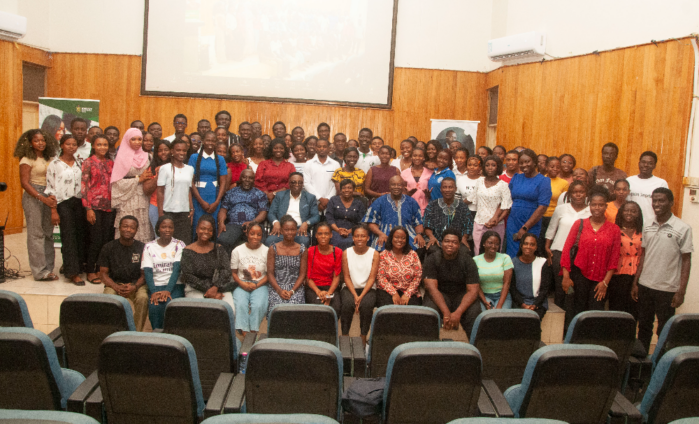

The Kwame Nkrumah University of Science and Technology (KNUST) has hosted key industry players, including the Food and Drugs Authority (FDA), the CSIR-Food Research Institute (CSIR-FRI), and Blue Skies, as part of a strategic engagement with final-year students aimed at bridging the gap between academia and industry.
The event, held on campus, brought together students from science and technology-related disciplines to interact directly with professionals and institutions shaping Ghana’s food, health, and manufacturing sectors. It formed part of KNUST’s ongoing efforts to prepare graduates for the demands of the job market through practical exposure and industry collaboration.
Representatives from the FDA provided insights into regulatory standards, food safety protocols, and career opportunities within Ghana’s public health and regulatory ecosystem. They emphasized the importance of compliance, innovation, and ethical practices in ensuring consumer safety and maintaining public trust.
The CSIR-FRI team also highlighted the role of research and innovation in advancing Ghana’s agro-processing industry. Students were introduced to ongoing projects, internship opportunities, and the institute’s contributions to food security, product development, and value addition across the agricultural value chain.
Meanwhile, Blue Skies shared its experience as a leading agro-processing company operating in Ghana and across international markets. Company officials discussed industry expectations, skills required for employment, and the importance of adaptability, teamwork, and problem-solving in a competitive global environment.
Students who participated in the engagement described the session as insightful and timely, noting that it provided them with a clearer understanding of career pathways and industry expectations ahead of graduation.
KNUST officials reiterated the university’s commitment to strengthening partnerships with industry stakeholders to enhance student employability and ensure that academic training remains relevant to national development needs.
The engagement forms part of a broader initiative by KNUST to create a dynamic learning environment where theory is complemented by real-world application, equipping graduates with the skills and knowledge needed to thrive in their respective fields.
