
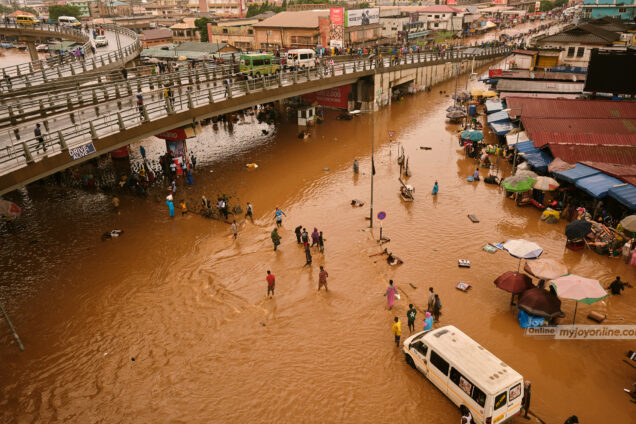

The Ghana Institution of Engineering has proposed a comprehensive 19-point action plan aimed at addressing Ghana’s persistent flooding problem, urging authorities to adopt a coordinated, long-term approach rather than relying on emergency responses after heavy rains.
According to the institution, the country’s recurring floods are the result of a combination of poor urban planning, inadequate drainage infrastructure, weak enforcement of building regulations, environmental degradation, and poor waste disposal practices. It stressed that solving the challenge requires collaboration between government agencies, local authorities, engineers, urban planners, environmental experts, and the public.
The engineering body recommended the rehabilitation and expansion of existing drainage systems, regular desilting of drains and waterways, and the strict enforcement of planning and building regulations to prevent construction on waterways and flood-prone lands. It also called for improved solid waste management to stop drains from becoming clogged with refuse.
Among the proposals are investments in modern flood forecasting and early warning systems, the protection and restoration of wetlands and natural water retention areas, and the integration of climate resilience measures into infrastructure development. The institution further advocated stronger maintenance regimes for drainage networks and increased funding for flood mitigation projects.
The engineers also recommended comprehensive urban planning reforms, stricter penalties for illegal developments, and enhanced public education campaigns to encourage responsible environmental behaviour. They noted that engineering interventions alone cannot eliminate flooding unless citizens also change habits such as indiscriminate dumping of waste into drains.
The 19-point plan also highlights the need for improved coordination among government institutions, better collection and use of hydrological data, regular risk assessments, emergency preparedness, and the adoption of sustainable land-use policies that account for the effects of climate change.
The Ghana Institution of Engineering believes that implementing the recommendations will significantly reduce the frequency and impact of flooding, protect lives and property, and build more resilient communities. It urged policymakers to treat flood management as a national development priority, warning that delays in implementing lasting solutions could lead to increasing economic losses and humanitarian challenges during future rainy seasons.
