
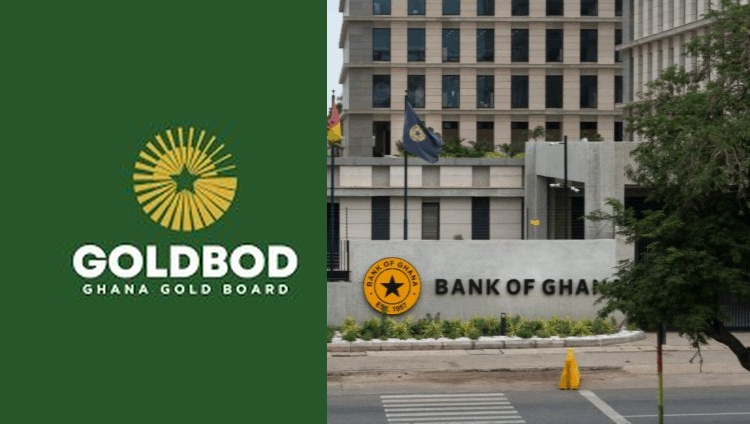

Analysis: How GOLDBOD’s “beautiful” 2025 financials are sparking questions over a GH¢9 billion Bank of Ghana gap
A heated financial debate is unfolding in Ghana following claims that strong 2025 financial results attributed to GOLDBOD may be connected to emerging concerns over a reported GH¢9 billion shortfall on the Bank of Ghana’s balance sheet.
The situation has not been officially confirmed as a causal link by any regulator or audited statement, but the timing and scale of the figures have prompted economists and market watchers to take a closer look at possible interconnections within the public financial system.
Strong results, rising questions
GOLDBOD’s 2025 financial performance has been described by some analysts as unusually strong, with reports pointing to improved profitability, asset growth, and a generally “cleaner” balance sheet compared to previous years.
However, beneath the positive headline numbers, some financial observers are asking whether the strength in reported performance may partly reflect accounting adjustments, valuation gains, or restructuring measures that do not immediately show the full underlying cash position.
The Bank of Ghana’s reported imbalance
At the same time, attention has shifted to what is being described in financial circles as a potential GH¢9 billion imbalance or gap in the Bank of Ghana’s accounts.
While central banks often experience fluctuations due to foreign exchange interventions, liquidity support operations, and valuation changes on financial instruments, the scale of the figure has raised eyebrows among analysts.
Some experts suggest that such gaps can emerge when central banks absorb systemic financial pressures in order to stabilise the broader economy and banking sector.
The linkage being debated
The core of the current analysis is not a confirmed transfer of losses from one institution to another, but rather the possibility of indirect balance sheet effects within Ghana’s interconnected financial architecture.
In such systems, improved financial positions in one public entity can sometimes coincide with deferred liabilities, restructuring arrangements, or policy interventions that place pressure on the central bank.
This has led to questions such as:
Were any financial support measures extended through the central bank?
Were any obligations reclassified or deferred within the broader public sector?
Do the reported profits reflect operational gains or accounting adjustments?
Analysts call for clarity
Economists and governance experts are urging caution in interpreting the figures, stressing that headline profits do not always equate to net system-wide gains.
They argue that without full transparency on inter-agency transactions and off-balance-sheet exposures, it is difficult to draw firm conclusions about how different financial outcomes are connected.
Waiting for official clarification
So far, there has been no detailed public explanation directly linking GOLDBOD’s 2025 financial performance to the reported Bank of Ghana gap.
Stakeholders expect that upcoming audits, parliamentary scrutiny, or official financial statements may provide more clarity on whether the two developments are related, coincidental, or part of broader structural adjustments within the financial system.
For now, the issue remains an active subject of analysis—highlighting the complexity of public financial reporting and the importance of transparency in understanding how strong figures in one part of the system may align with stress in another.
