
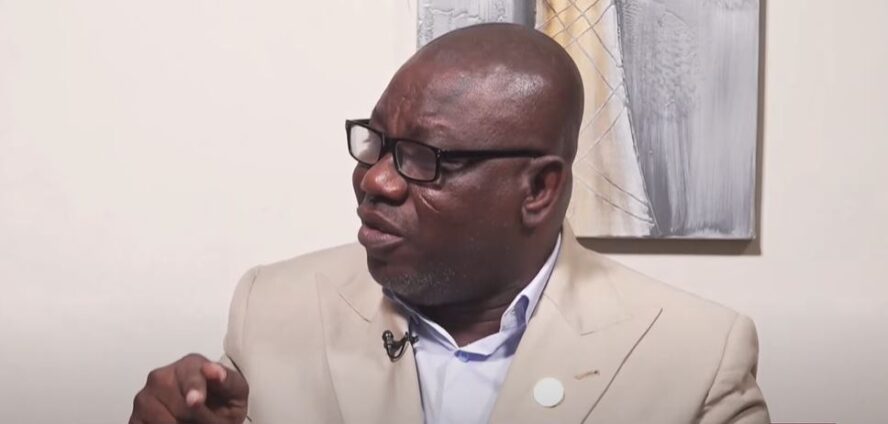

Isaac Adongo has defended plans to recapitalise the Bank of Ghana amid growing public debate over the central bank’s reported GH¢93.82 billion negative equity position.
According to Mr. Adongo, the recapitalisation process is necessary to restore the financial strength of the central bank and ensure confidence in Ghana’s financial system following the economic challenges and debt restructuring measures that affected the Bank of Ghana’s balance sheet.
Speaking on the issue, the Bolgatanga Central MP argued that central banks across the world occasionally require recapitalisation after periods of economic shocks, policy interventions, or financial crises, insisting that the situation should not be politicised.
He explained that the Bank of Ghana’s negative equity was largely influenced by extraordinary measures taken during difficult economic conditions, including support for financial sector stability and the Domestic Debt Exchange Programme.
Mr. Adongo stressed that the central bank remains operational and capable of carrying out its core responsibilities despite the negative equity position.
“The Bank of Ghana is not collapsing. Central banks are different from commercial banks, and recapitalisation is a normal financial and policy process aimed at strengthening the institution,” he stated.
His comments come as economists, political figures, and members of the public continue to debate the implications of the Bank of Ghana’s financial position and the broader impact on the national economy.
Critics of the recapitalisation plan have raised concerns about the potential burden on taxpayers and questioned how the central bank accumulated such significant losses. Others, however, argue that stabilising the central bank is essential for maintaining investor confidence and preserving macroeconomic stability.
Mr. Adongo further maintained that efforts to strengthen the Bank of Ghana should be viewed within the context of protecting the country’s financial architecture rather than as a partisan political issue.
He also called for balanced public discussions on the matter, urging critics to appreciate the role the central bank played during periods of economic uncertainty.
The debate over the Bank of Ghana’s financial health has intensified in recent months following disclosures about its balance sheet and discussions surrounding the institution’s long-term recovery strategy.
