
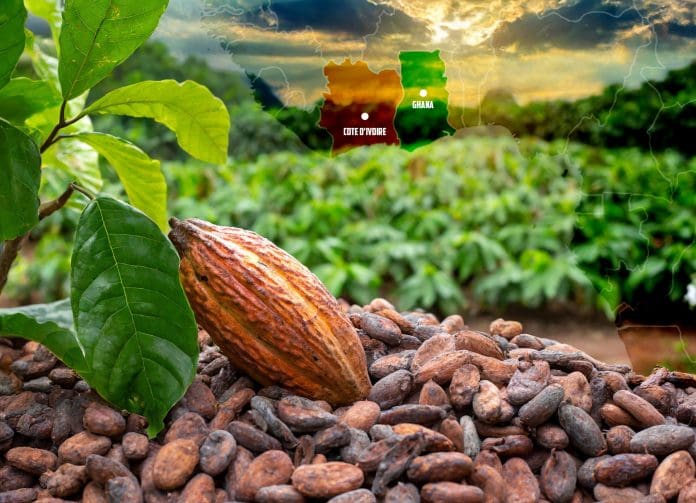

Ghana’s cocoa sector—long regarded as the backbone of the country’s agricultural exports—is facing a period of deep uncertainty as global tensions, shipping disruptions, and excess supply converge to create a difficult operating environment for farmers and industry stakeholders.
Cocoa, one of Ghana’s most valuable export commodities, supports the livelihoods of more than 800,000 farmers and contributes significantly to foreign exchange earnings. However, recent global developments have placed increasing pressure on the sector, raising concerns about sustainability and future profitability.
One of the key challenges confronting the industry is the growing instability in global trade routes caused by geopolitical conflicts. Ongoing wars and tensions in parts of Europe and the Middle East have disrupted shipping lanes, increased insurance costs for cargo vessels, and slowed the movement of goods across international markets. These disruptions have made it more expensive and unpredictable for cocoa exporters to transport beans to major markets in Europe, Asia, and North America.
Shipping companies have also begun charging higher freight rates due to security concerns and longer alternative routes, particularly where vessels are avoiding conflict-prone areas. The result has been delays in deliveries and increased operational costs for exporters, many of whom are already grappling with tight margins.
At the same time, the global cocoa market is experiencing an oversupply situation in certain regions, which has further complicated matters. Although demand for chocolate remains steady in many parts of the world, increased production from some cocoa-growing countries has added pressure on international prices.
This combination of supply pressures and logistical challenges has placed Ghana’s cocoa sector at a crossroads. Industry analysts warn that if the situation persists, farmers could face declining incomes despite rising production costs.
For many cocoa farmers in Ghana’s rural communities, the stakes are particularly high. Rising costs of fertilizers, pesticides, and labour have already eroded profit margins in recent years. When international prices drop or shipments are delayed, the financial impact is felt directly at the farm level.
Some farmers have begun expressing fears about the long-term viability of cocoa farming if market conditions do not improve. Younger generations are increasingly reluctant to enter the industry, opting instead for alternative sources of income in urban areas.
Experts say Ghana may need to accelerate efforts to diversify its cocoa economy by investing more in value addition, such as local processing and chocolate manufacturing. Expanding domestic processing capacity could help the country capture more value from its cocoa beans rather than relying heavily on raw exports.
In addition, strengthening supply chain resilience and exploring alternative shipping routes may become essential strategies in an increasingly volatile global trade environment.
Government agencies and industry regulators are also under pressure to introduce policies that protect farmers from price volatility while ensuring the long-term competitiveness of Ghana’s cocoa sector.
Despite the current challenges, stakeholders remain hopeful that strategic reforms and improved market conditions could stabilize the industry. Ghana’s cocoa still enjoys a strong reputation globally for its quality, and demand for ethically sourced cocoa continues to grow.
However, with global conflicts affecting trade routes and supply dynamics shifting, the country’s cocoa sector now finds itself at a critical juncture—one that will require careful planning, investment, and collaboration to navigate successfully.
