
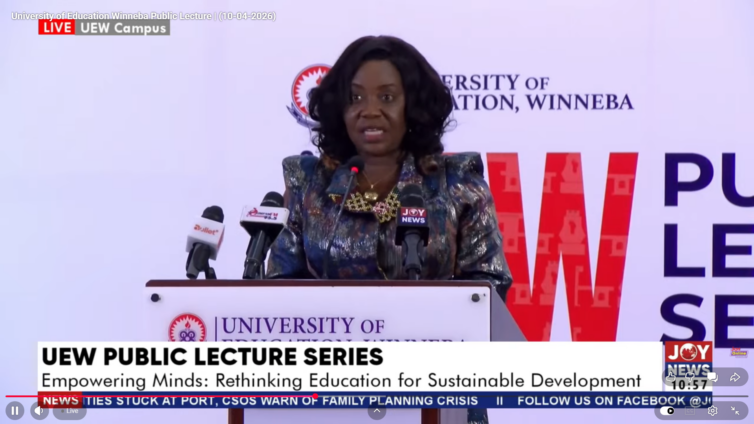

The Chief Executive Officer of Telecel Ghana has called for sweeping reforms in Ghana’s education system, stressing the need for a stronger collaboration between industry and academia to better prepare graduates for the evolving demands of the job market.
Speaking at a public lecture hosted by the University of Education, Winneba, the CEO highlighted the growing disconnect between academic training and industry expectations, warning that without deliberate intervention, the gap could continue to widen and hinder national development.
According to the Telecel Ghana boss, many graduates leave tertiary institutions with strong theoretical knowledge but lack the practical skills and critical thinking abilities required in today’s fast-paced, technology-driven world. He noted that industries are increasingly seeking talent that is adaptable, innovative, and equipped with hands-on experience.
He therefore urged policymakers, educational institutions, and private sector players to work collaboratively to redesign curricula that reflect real-world needs. This, he said, includes embedding digital skills, entrepreneurship, and problem-solving into academic programmes while also creating more opportunities for internships, apprenticeships, and industry-led training.
The CEO emphasized that telecommunications companies like Telecel Ghana are ready to play a more active role in shaping education outcomes. He pointed out that stronger partnerships could involve co-developing courses, supporting research, and providing platforms for students to gain practical exposure.
He also underscored the importance of investing in Science, Technology, Engineering, and Mathematics (STEM) education, noting that Ghana’s ability to compete globally will depend largely on how well it nurtures talent in these critical areas.
Addressing students and faculty at the lecture, he encouraged young people to take personal initiative in building relevant skills beyond the classroom. He advised them to leverage digital tools, online learning platforms, and networking opportunities to remain competitive in a rapidly changing world.
The event, attended by academics, students, and industry professionals, served as a platform to spark dialogue on the future of education in Ghana. Participants echoed the CEO’s call for reform, stressing that a more integrated approach between academia and industry is essential for driving innovation, economic growth, and sustainable development.
The lecture forms part of ongoing efforts by the University of Education, Winneba to engage stakeholders on key national issues and promote solutions that align education with Ghana’s developmental agenda.
Source
