
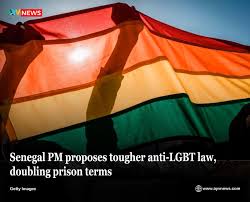

Senegal’s Prime Minister has ignited national and international debate after announcing plans to strengthen the country’s laws criminalizing same-sex relationships, proposing significantly harsher penalties for those found guilty under existing legislation.
The proposed reforms would amend Senegal’s penal code to double prison sentences for individuals convicted of engaging in same-sex relations. Currently, Senegalese law criminalizes what it describes as “acts against nature,” with penalties ranging from one to five years in prison, along with fines. Under the Prime Minister’s proposal, those convicted could face prison terms of up to ten years, marking one of the most severe crackdowns on LGBTQ individuals in the country’s history.
Speaking during a recent public address, the Prime Minister argued that the move reflects the values and cultural norms of Senegalese society. He stated that the government has a responsibility to uphold what he described as the moral foundations of the nation and to resist what he characterized as external pressures to liberalize social policies.
The announcement has drawn mixed reactions domestically. Supporters of the proposal, including some religious leaders and conservative advocacy groups, have welcomed the move, saying it reinforces traditional family structures and aligns with widely held societal beliefs in the predominantly Muslim West African country. They argue that Senegal’s legal framework should reflect its cultural and religious identity.
However, human rights organizations and civil society groups have expressed deep concern. Activists warn that tougher laws could intensify stigma, discrimination, and violence against LGBTQ individuals, many of whom already live in fear due to existing legal and social pressures. Critics also argue that expanding punitive measures risks isolating Senegal diplomatically and could affect its international partnerships, particularly with countries and institutions that prioritize human rights protections.
International human rights groups have consistently called on Senegal to decriminalize same-sex relationships, citing global trends toward greater inclusion and equality. They contend that criminalization violates fundamental rights to privacy, dignity, and freedom from discrimination.
The proposed amendment is expected to be debated in Parliament in the coming months. If passed, it would further entrench Senegal’s restrictive stance on LGBTQ rights at a time when several other African nations are either reconsidering similar laws or facing legal challenges over them.
As the debate unfolds, the issue is likely to remain a flashpoint in Senegal’s political discourse, reflecting broader tensions between tradition, human rights advocacy, and evolving global norms.
