
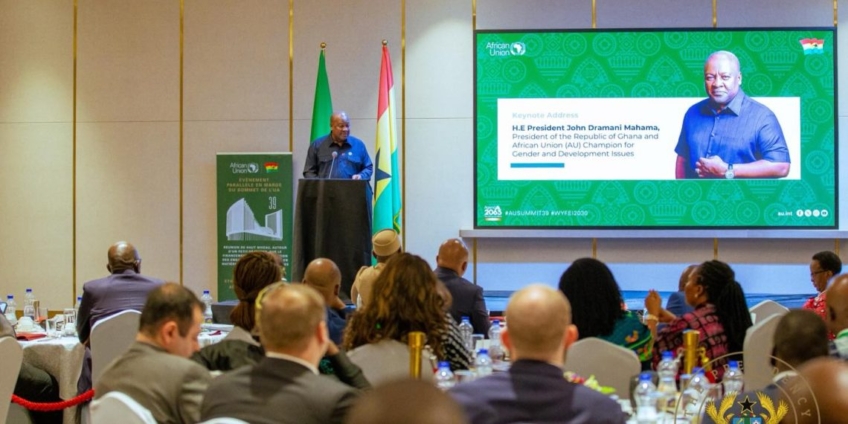

John Dramani Mahama has announced plans to end the export of raw mineral ores by 2030, outlining a strategic shift toward local processing and value addition as part of a broader industrialisation agenda.
The policy direction, according to Mahama, is aimed at maximizing Ghana’s mineral wealth, creating sustainable jobs, and significantly increasing export earnings through domestic beneficiation.
From Raw Exports to Refined Products
Speaking on the need to transform Ghana’s extractive sector, Mahama stressed that exporting unprocessed mineral ores deprives the country of critical economic benefits.
He explained that raw mineral exports generate limited value compared to refined or semi-processed products, which attract higher prices on the international market and stimulate domestic industries.
The proposed transition will focus on establishing refineries, smelters, and processing plants within Ghana to ensure that minerals such as gold, bauxite, lithium and manganese are refined locally before export.
2030 Target to Drive Structural Change
Mahama’s 2030 deadline is expected to serve as a roadmap for structural reforms in the mining sector. The move would require substantial investment in infrastructure, energy supply, regulatory frameworks, and skilled labour development.
He indicated that government would work closely with investors, mining companies, and development partners to accelerate industrial capacity while enforcing policies that promote in-country value addition.
Boosting Employment and Industrial Growth
The shift toward local processing is projected to create thousands of direct and indirect jobs across mining communities and industrial hubs.
Mahama argued that beneficiation would stimulate related sectors, including manufacturing, logistics, engineering, and technology, thereby reducing unemployment and diversifying Ghana’s economy.
Enhancing Revenue and Economic Sovereignty
Beyond job creation, Mahama said the initiative would significantly boost government revenue through higher export values, taxes, and royalties derived from processed minerals.
He described the policy as a step toward strengthening economic sovereignty, reducing dependency on raw commodity exports, and positioning Ghana as a competitive industrial player within Africa and beyond.
The announcement signals a renewed push toward resource-based industrialisation, with value addition at the heart of Ghana’s long-term economic transformation strategy.
