
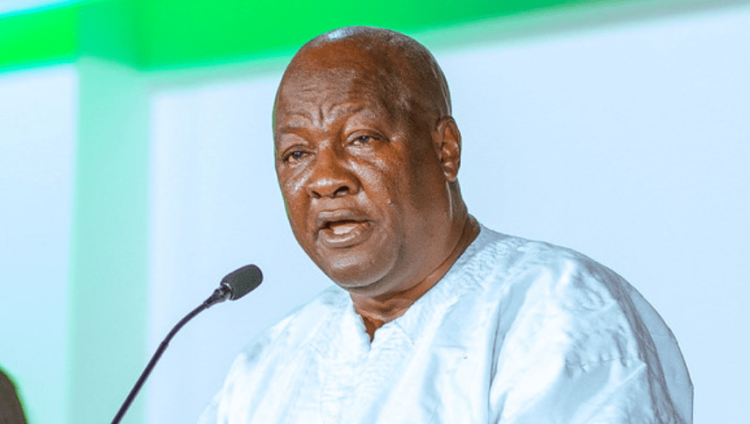

President John Dramani Mahama is set to lead Ghana’s delegation to a special session of the United Nations focused on reparatory justice, a global conversation aimed at addressing the historical consequences of slavery, colonialism and systemic exploitation affecting people of African descent.
The high-level meeting, expected to bring together heads of state, diplomats, academics and civil society leaders from across the world, will examine pathways toward justice, accountability and restitution for communities that continue to experience the lasting impact of historical injustices. Ghana’s participation is seen as particularly significant given the country’s long-standing advocacy for reparative justice within international forums and the African diaspora.
According to officials, President Mahama’s presence underscores Ghana’s commitment to championing the call for reparations and strengthening partnerships among African nations and the diaspora. The delegation is expected to present Ghana’s perspective on the moral, legal and economic arguments for reparatory justice, while also highlighting ongoing national initiatives that seek to reconnect with descendants of enslaved Africans worldwide.
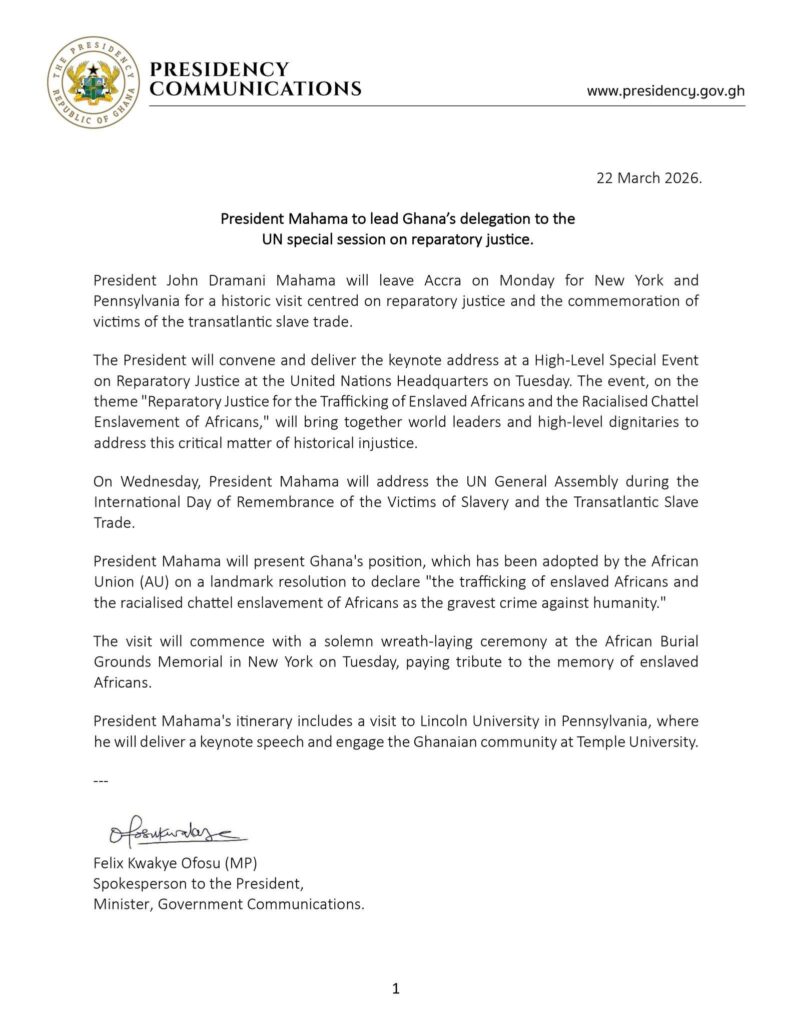
The discussions at the UN session will focus on policy proposals, research findings and practical frameworks that could guide future international cooperation on reparations. Key topics include historical accountability, economic redress, cultural restitution and the development challenges faced by countries affected by centuries of exploitation.
Observers say Ghana has positioned itself as a leading voice in the global reparations movement, building on initiatives such as diaspora engagement programmes and historical remembrance projects. By participating at the highest level, the country hopes to help shape a broader international consensus on how nations and institutions can address the enduring legacy of slavery and colonialism.
The outcomes of the session are expected to influence future debates within the United Nations system and regional bodies, including discussions among African leaders on coordinated strategies for pursuing reparatory justice on the global stage. Ghana’s delegation will also engage with representatives from other countries and advocacy groups to explore collaboration and build momentum toward concrete action.
Source
