

Former President John Dramani Mahama has called for stronger private sector involvement in Ghana’s industrial water supply system, stressing that sustainable reforms are critical to boosting productivity and accelerating national development.
Speaking at a stakeholder engagement on infrastructure and industrial growth, Mr. Mahama underscored the need for innovative financing models and strategic partnerships to address persistent challenges within the country’s water distribution network. He noted that reliable and affordable water supply remains a key pillar for industrial expansion, particularly for manufacturing, agro-processing, and emerging industrial hubs.
According to him, while government retains a regulatory and oversight role, the participation of private investors can inject efficiency, capital, and technical expertise into the sector. He explained that modernising water infrastructure through public-private partnerships (PPPs) would not only improve service delivery but also reduce operational inefficiencies that have long hampered industrial output.
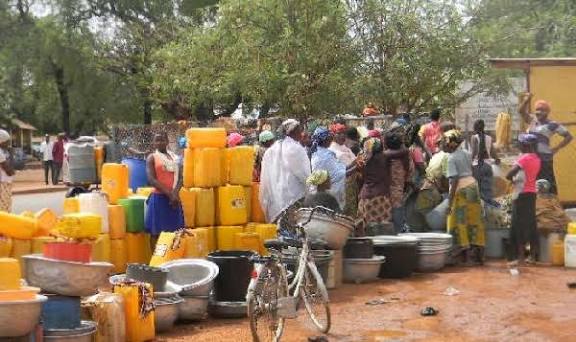
Mr. Mahama pointed out that inadequate water supply continues to increase production costs for many businesses, forcing some companies to rely on expensive alternative sources. He warned that without urgent reforms, Ghana’s ambition to become a competitive industrial economy could face significant setbacks.
He further stressed that reforms must be carefully structured to ensure transparency, accountability, and affordability. Safeguards, he said, should be built into any partnership arrangement to protect consumers while ensuring fair returns for investors.
The former president also highlighted the importance of strengthening institutions such as the Ghana Water Company Limited, urging reforms that will enhance operational efficiency and financial sustainability. He maintained that institutional restructuring, combined with targeted private sector participation, would help modernise infrastructure and improve service reliability.
Mr. Mahama reiterated that Ghana’s industrialisation drive depends heavily on stable infrastructure, including water and energy. He called on policymakers, investors, and development partners to collaborate in crafting pragmatic solutions that will position the country as an attractive destination for industrial investment.
He concluded by emphasising that water supply reforms should be viewed not merely as a utility upgrade but as a strategic economic intervention capable of unlocking jobs, boosting exports, and supporting long-term national transformation.
