
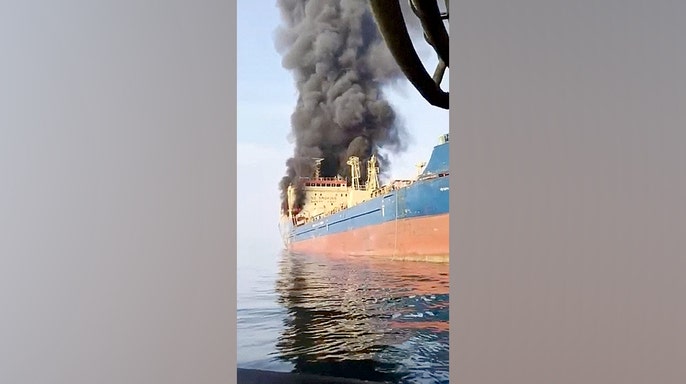

In a dramatic and dangerous escalation of the wider Middle East conflict, Iran has launched a series of “indiscriminate” strikes across the Gulf of Oman, targeting maritime traffic and hitting at least one tanker connected to Tehran’s shadow oil network. The moves come amid a broader retaliation campaign after earlier U.S. and Israeli military action against Iran.
The Gulf of Oman and nearby Strait of Hormuz — one of the world’s most strategically vital shipping lanes, funneling roughly a fifth of global oil supplies — has become a flashpoint as Tehran seeks to push back against what it calls foreign aggression.
At the heart of the latest attacks was an incident off the northern coast of Oman. A Palau-flagged oil tanker known as Skylight — part of what Western governments label Iran’s “shadow fleet” used to evade sanctions — was struck near the Musandam Peninsula. International shipping trackers and Oman’s maritime authorities confirmed the crew of around 20 was evacuated after the vessel caught fire and began sinking. At least four crew members were wounded in the incident. The ship’s management firm and owner have been previously sanctioned by the U.S. for moving Iranian oil around international markets.
According to maritime intelligence firms, Iran’s forces have broadened strikes across the Gulf of Oman and beyond, targeting vessels regardless of nationality or flag — a sharp departure from earlier, more selective actions. Analysts describe this as indiscriminate targeting that has heightened the risk of civilian and commercial casualties.
These naval strikes are not isolated. They are part of a rapidly escalating conflict that has spread across the region. Tehran’s campaign of missile and drone attacks followed a large-scale series of U.S. and Israeli strikes on Iranian soil, which included the killing of Iran’s Supreme Leader and senior military commanders. In response, Iran has hit U.S. bases, oil infrastructure in Gulf states, and now appears to be enforcing unilateral control over shipping lanes.
The impact on global shipping has been immediate and severe. Maritime traffic in the Strait of Hormuz and Gulf of Oman has plummeted, with hundreds of vessels either anchored offshore or diverting to avoid the danger. Marine insurers have suspended war-risk coverage for the area, and global energy markets have reacted with sharp price spikes as oil and gas flows are disrupted.
Regional governments, including Gulf Arab states, have publicly condemned the attacks as reckless and destabilizing — and some are now considering coordinated military or diplomatic responses as tensions reach unprecedented levels.
