

Iran has issued an apology to neighbouring Gulf countries even as the conflict in the Middle East continues to escalate, with fresh missile and drone attacks reported across the region.
Iranian President Masoud Pezeshkian offered a rare public apology to Gulf states affected by recent Iranian strikes, saying Tehran regretted the impact of its actions on neighbouring countries. He urged regional governments not to join the United States and Israel in military operations against Iran.
Pezeshkian said Iran’s temporary leadership council had agreed to suspend attacks on neighbouring states unless those countries allowed their territories to be used to launch strikes against Iran. The statement appeared aimed at calming tensions with Gulf nations that host US military bases but have largely tried to avoid being drawn directly into the conflict.
However, hours after the apology, reports emerged that Iranian drones targeted a US air combat centre at Al Dhafra Air Base near Abu Dhabi. Several Gulf states, including the United Arab Emirates, Saudi Arabia, Qatar, Kuwait and Bahrain, have reported missile and drone incidents in the past week as the war spills beyond Iran’s borders.
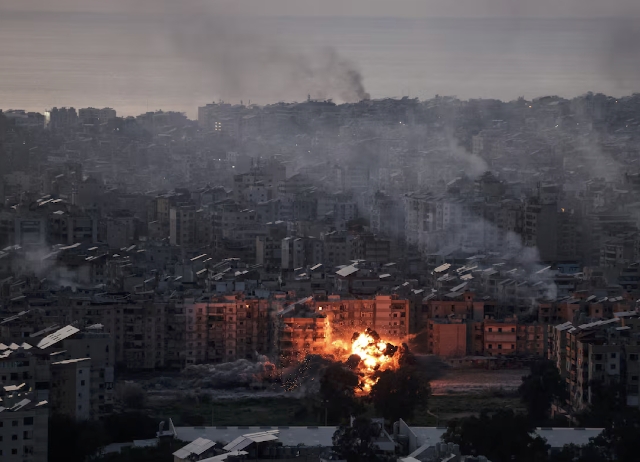
The conflict entered its second week with Israel and Iran continuing to exchange strikes. Explosions were reported in Tehran while Israel launched new attacks on Iranian targets and Hezbollah positions in Lebanon. Iran also fired multiple missile barrages toward Israel, triggering air raid sirens and interceptions by Israeli air defences.
The widening conflict has already caused heavy casualties. Iranian officials say more than 1,300 civilians have been killed in US-Israeli strikes, while Iranian retaliatory attacks have left several people dead in Israel and killed US service members in the region.
Meanwhile, US President Donald Trump has demanded Iran’s “unconditional surrender,” warning of further military action if Tehran does not comply. Iran has rejected the demand, insisting that any change in leadership would be determined solely by its own constitutional process and without foreign interference.
The war has shaken global markets and disrupted key shipping routes, with tensions threatening traffic through the Strait of Hormuz, a critical passage for the world’s oil supply. Analysts warn that continued escalation could draw more countries into the conflict and deepen instability across the Middle East.
