
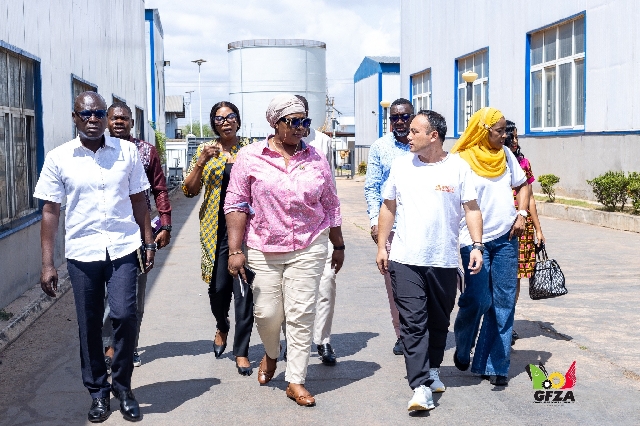

The Chief Executive Officer of the Ghana Free Zones Authority, has embarked on a tour of various enterprises within the Tema Free Zones enclave to engage with business operators and strengthen collaboration between the authority and industry players.
During the tour, the GFZA boss met with executives of both local and foreign companies operating in sectors such as manufacturing, logistics, and export processing. The objective was to assess operational challenges, explore opportunities for increased investment, and foster a closer working relationship with enterprises benefiting from free zone incentives.
Speaking at a briefing with business leaders, the GFZA CEO emphasised the importance of continuous dialogue between the authority and companies. She noted that free zones play a pivotal role in driving industrial growth, boosting exports, and creating employment opportunities, and that collaboration is key to maximising these benefits.
“The success of our free zones is directly linked to how well we support our enterprises. By listening to their concerns and providing practical solutions, we can create an environment that encourages investment, innovation, and competitiveness,” she said.
The tour also included visits to manufacturing facilities to observe operations firsthand and understand areas where the authority could offer technical and regulatory support. Several companies raised concerns about infrastructure, customs processes, and access to skilled labour, which the GFZA boss pledged to address through targeted interventions and policy adjustments.
Industry stakeholders welcomed the initiative, saying that enhanced communication with the GFZA would help them navigate regulatory requirements more efficiently and enable them to expand their operations.
The visit underscores the authority’s commitment to promoting an investor-friendly climate within Ghana’s free zones, strengthening partnerships with enterprises, and positioning the country as a preferred destination for export-oriented industrial activity.
The CEO concluded by promising that such engagements would be regular, ensuring that the voice of businesses continues to inform policy and operational decisions within the free zones.
