
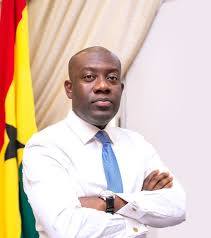

Former Information Minister, Kojo Oppong Nkrumah, has stated that while Ghana’s proposed 24-hour economy policy is achievable, its success will depend heavily on the presence of effective demand to sustain round-the-clock production and services.
According to him, the concept of a 24-hour economy is not inherently flawed, but it must be grounded in practical economic realities rather than political enthusiasm.
Policy Must Respond to Market Forces, Not Just Ambition
Speaking on the broader economic discourse, the Member of Parliament emphasized that businesses cannot be compelled to operate 24 hours a day unless there is sufficient consumer demand to justify the additional operational costs.
He explained that extending working hours in sectors such as manufacturing, retail, transport, and hospitality would require increased consumption levels, reliable energy supply, and strong purchasing power among citizens.
“The foundation of any successful 24-hour economy is effective demand,” he stressed, adding that without steady patronage and viable markets, businesses would struggle to sustain continuous operations.
Infrastructure and Incentives Key to Success
Kojo Oppong Nkrumah further noted that for the policy to yield results, government must ensure supporting infrastructure is in place — including stable electricity, improved security, efficient transport systems, and access to finance for businesses.
He also called for clear incentives to encourage private sector participation, suggesting tax breaks, regulatory reforms, and targeted support for industries with high job-creation potential.
24-Hour Economy Debate Gains Momentum
The proposed 24-hour economy policy has become a major talking point in Ghana’s political and economic discussions, with proponents arguing that it could boost productivity, reduce unemployment, and accelerate industrial growth.
However, critics have cautioned that without careful planning and macroeconomic stability, the policy risks becoming difficult to implement effectively.
Call for Broad Stakeholder Engagement
Oppong Nkrumah urged policymakers to engage industry leaders, labour unions, and economic experts in shaping the framework for the policy to ensure it reflects the realities of Ghana’s business environment.
He concluded that while the idea holds promise, its long-term viability will depend on strategic planning, fiscal discipline, and above all, genuine economic demand capable of sustaining a 24-hour operational cycle.
