
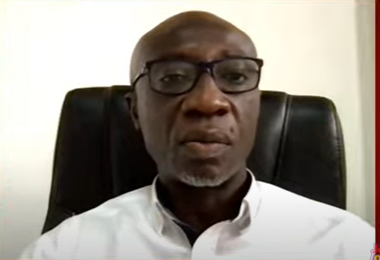

A Ghanaian international law expert, Kwadwo Appiagyei-Atua, has cautioned that implementing the recently adopted United Nations resolution on slavery and reparatory justice will face significant challenges, despite the strong moral and symbolic message it sends to the global community.
Prof. Appiagyei-Atua noted that while the resolution represents an important step toward acknowledging the historical injustices of slavery and the transatlantic slave trade, translating its provisions into practical action among member states will not be straightforward. According to him, the difficulty lies largely in the political, legal, and economic implications that enforcement could carry for countries involved in or affected by the historical trade.
Speaking on the development, the law professor explained that resolutions passed by the United Nations often serve as frameworks for dialogue, advocacy, and policy direction rather than immediate legally binding obligations. As a result, achieving meaningful outcomes will depend heavily on the willingness of individual countries to adopt the recommendations and implement measures that address the legacy of slavery.
He emphasized that the issue of reparations is particularly complex. Many countries that are expected to play a key role in addressing historical injustices may approach the matter cautiously, given the financial and political ramifications that such commitments could entail. This, he said, could slow down progress even though there is growing global recognition of the need for justice and accountability.
Prof. Appiagyei-Atua also pointed out that differences in legal systems, historical interpretations, and national interests among UN member states could complicate efforts to reach consensus on practical steps forward. In addition, establishing clear mechanisms for compensation, restitution, or other forms of reparative justice would require extensive negotiations and international cooperation.
Despite these challenges, he stressed that the resolution remains an important milestone in the global conversation on historical accountability. According to him, it creates an opportunity for affected countries, particularly those in Africa and the Caribbean, to strengthen advocacy efforts and push for policies that address the enduring impact of slavery on their societies and economies.
He further called on African governments and regional bodies to work together to develop coordinated strategies that would ensure their interests are represented in future discussions at the international level. Such collaboration, he said, could help sustain momentum around the issue and increase pressure for concrete outcomes.
The professor concluded that while enforcing the UN slavery resolution may prove difficult in the short term, sustained diplomatic engagement, research, and public awareness could gradually build the foundation needed to translate the resolution’s principles into real-world impact.
