
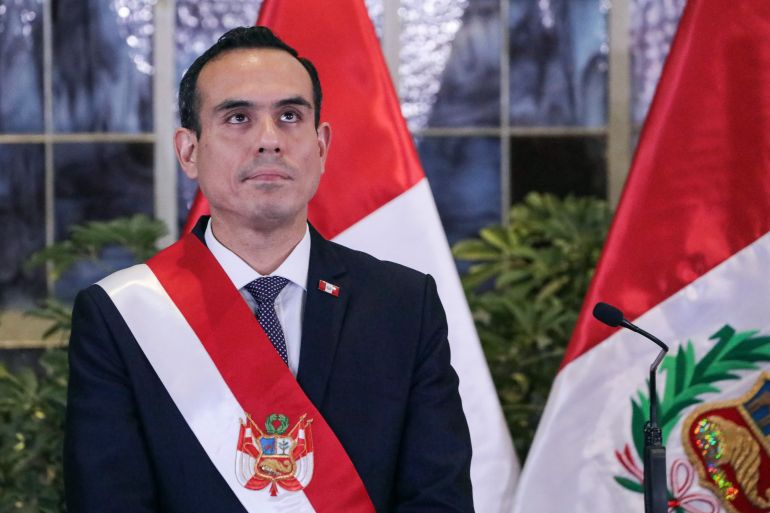

Dina Boluarte has been impeached just four months into her term as President of Peru, plunging the South American nation deeper into political uncertainty.
In a dramatic session marked by heated exchanges and mounting public pressure, Peru’s Congress voted overwhelmingly to remove the president from office, citing allegations of misconduct and loss of moral authority.
Swift Fall From Power
The impeachment marks one of the shortest presidential tenures in Peru’s recent history, underscoring the country’s chronic political instability. Lawmakers argued that the president had failed to restore confidence in government amid ongoing social unrest and economic challenges.
The vote followed weeks of escalating tensions between the executive and legislative branches, with opposition figures pushing for her removal over what they described as governance failures and controversial decisions.
Leadership Vacuum and Constitutional Process
Under Peru’s constitutional framework, the vice president — or the next in line as stipulated by law — is expected to assume office in the interim. Congressional leaders have indicated that the transition will follow constitutional procedures to avoid further institutional crisis.
Political analysts warn that the leadership change may not immediately calm unrest, as deep divisions persist within Peru’s political class and among the broader population.
A Nation Familiar With Turmoil
Peru has experienced repeated presidential removals and resignations in recent years, with successive administrations struggling to complete full terms. The latest impeachment adds to a growing list of abrupt leadership changes that have shaken investor confidence and triggered waves of protest.
As the country braces for yet another transition, attention now turns to whether the incoming leadership can stabilise governance and rebuild public trust in Peru’s democratic institutions.
