
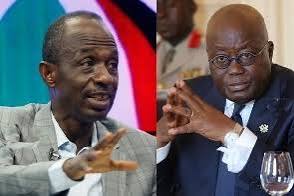

National Chairman of the opposition (NDC), Asiedu Nketia, has attributed Ghana’s current economic difficulties to what he describes as years of mismanagement and policy missteps under the administration of former President Nana Akufo-Addo.
Speaking at a party gathering, Asiedu Nketia argued that the economic challenges confronting households and businesses did not occur overnight but were the result of what he termed “reckless borrowing, weak fiscal discipline, and poor prioritisation of national resources.”
According to him, the Akufo-Addo-led government failed to effectively manage public debt and allowed inflation to spiral, leaving ordinary Ghanaians struggling with rising prices of goods and services. He maintained that while global economic shocks, including the COVID-19 pandemic and geopolitical tensions, contributed to the downturn, domestic policy decisions significantly worsened the situation.
“The hardship our people are experiencing today is largely self-inflicted,” he stated, adding that successive warnings from economic analysts and civil society groups were ignored.
Asiedu Nketia further criticised flagship programmes introduced during the previous administration, claiming that some were poorly implemented and financially unsustainable. He insisted that governance must be grounded in transparency, accountability, and prudent resource management.
He also called for a comprehensive review of economic policies and a renewed focus on production, job creation, and local industry support. According to him, rebuilding public confidence will require strong leadership and a clear plan to stabilise the economy.
The comments come amid ongoing public debate about Ghana’s fiscal outlook and recovery efforts. The country has faced high inflation, currency depreciation, and rising debt levels in recent years, prompting negotiations with international financial institutions for support.
Supporters of the former administration have defended its record, pointing to external shocks and global economic pressures as major contributing factors. They argue that several social intervention programmes and infrastructure projects were designed to cushion vulnerable groups and drive long-term development.
However, Asiedu Nketia maintained that accountability is crucial in assessing Ghana’s economic trajectory. He urged citizens to scrutinise past decisions and support policies that prioritise sustainable growth and inclusive development.
As political parties gear up for future elections, economic management is expected to remain a central issue in national discourse.

При организации поминок в Минске важна тщательная подготовка, поэтому стоит обратиться к профессионалам по [url=https://ritual-blk.ru/]организации поминок в Минске[/url].
В Минске организация поминок требует особого подхода. В данной статье мы обсудим ключевые моменты, которые следует учесть.
Важным этапом является определение места, где будут проходить поминки. Выбор подходящего заведения в Минске может оказаться ключевым моментом в организации поминок. При выборе стоит обратить внимание на меню, атмосферу и доступность.
Вторым важным шагом станет составление списка гостей. Это поможет вам правильно организовать все детали и учесть всех близких. Важно информировать гостей заранее, чтобы они могли правильно спланировать свое время.
Техническое обеспечение также важно для проведения поминок. Возможно, вам понадобится специалист, который поможет организовать видеосъемку и фотографирование. Уделите внимание деталям, которые помогут создать легкую атмосферу среди гостей.
http://google.ps/url?q=http://ritual-blk.ru
https://www.triathlon.org/?URL=ritual-blk.ru
https://www.google.pl/url?q=http://ritual-blk.ru
http://www.google.es/url?q=http://ritual-blk.ru
http://www.orthodoxytoday.org/?URL=ritual-blk.ru