
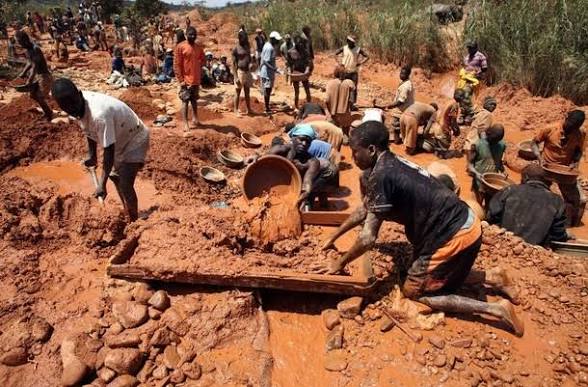

For decades, mining has remained one of the most important pillars of Ghana’s economy. From gold and bauxite to manganese and diamonds, the country has been blessed with enormous mineral wealth capable of transforming lives, creating jobs, and building strong communities. Yet despite the billions generated from the extractive sector over the years, many citizens continue to ask a difficult but necessary question: Who is truly benefiting from Ghana’s natural resources?
Across several mining communities, the contrast between the wealth beneath the soil and the living conditions above it has become impossible to ignore. Roads remain poor, unemployment continues to rise among the youth, and access to quality healthcare and education is still limited in many areas where mining activities are most intense. This growing reality has sparked renewed conversations about ownership, accountability, and the true meaning of national development.
Many observers argue that Ghana cannot continue to celebrate high mineral exports while communities closest to the resources remain underdeveloped. According to critics, the debate is no longer only about how much gold is extracted from the ground, but rather about who controls the wealth and how the proceeds are distributed.
The issue of ownership has particularly become central to the national conversation. Some believe foreign companies continue to dominate the sector while local participation remains limited. Others argue that although international investment is important for technical expertise and capital, Ghana must also strengthen local ownership structures that ensure citizens receive a more meaningful share of the profits generated from the country’s resources.
The conversation has become even more sensitive in recent years due to the rise of illegal mining, commonly known as galamsey. While authorities continue to battle environmental destruction caused by illegal operations, questions are also being raised about why many young people are willing to risk their lives in dangerous mining activities. For some analysts, the answer lies in unemployment, poverty, and the perception that ordinary citizens are excluded from the formal benefits of the mining industry.
Environmental concerns have further intensified the debate. Rivers once used for drinking and farming have reportedly become polluted in some areas, while vast portions of forest reserves have suffered destruction. This has led many citizens to question whether Ghana is sacrificing its future environmental security for short-term economic gains.
Others, however, insist that mining itself is not the enemy. According to industry experts, responsible mining has the potential to drive national growth if managed properly with transparency, regulation, and long-term planning. They argue that countries blessed with natural resources should not remain poor if systems are put in place to protect national interests.
The debate has also extended into politics and governance. Some citizens believe successive governments have failed to establish sustainable frameworks that ensure mining revenues directly improve local economies. Others are demanding greater transparency in contracts, royalties, and the allocation of mining revenues to development projects.
As these conversations continue, many Ghanaians believe the country has reached a point where difficult but honest questions can no longer be avoided. Can Ghana truly call itself resource-rich when many mining communities remain underdeveloped? How much ownership should locals have in the extractive sector? Are the environmental costs becoming too high? And most importantly, what kind of future is being built for the next generation?
For many, the answers to these questions may ultimately determine whether Ghana’s mineral wealth becomes a blessing that transforms the nation or a resource that continues to generate wealth without widespread development.
