
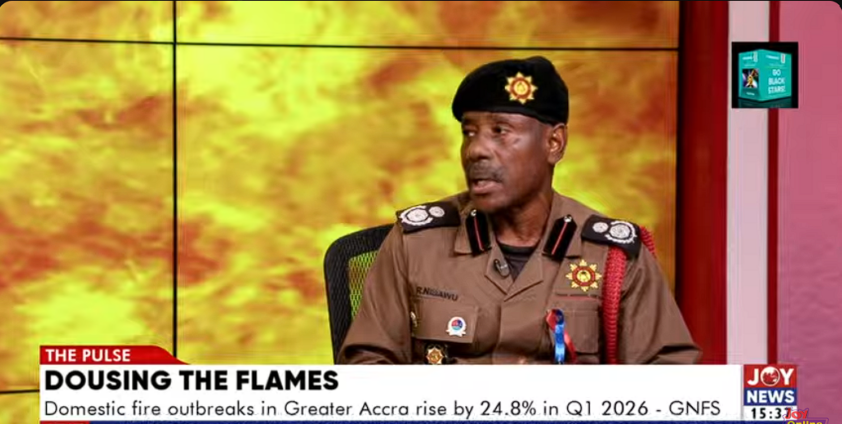

The Ghana National Fire Service (GNFS) has reported a slight increase in domestic fire outbreaks, attributing the trend largely to the proliferation of slum structures and congested living conditions in parts of the country.
According to the Service, many of these informal settlements are characterised by makeshift buildings constructed with highly combustible materials such as wood, plastic and fabric. These structures are often erected in close proximity to each other, making it easier for fires to spread rapidly once they ignite.
Public Relations officials of the GNFS explained that poor electrical wiring, unsafe cooking practices and the use of open flames in such communities further heighten the risk of fire outbreaks. They noted that in many cases, residents resort to illegal power connections, which significantly increases the likelihood of electrical faults and subsequent fires.
The Service also pointed to limited access routes within slum areas as a major challenge in firefighting efforts. Narrow pathways and unplanned layouts often prevent fire tenders from reaching the scene on time, allowing fires to escalate before they can be contained.
In addition, the GNFS highlighted that the absence of basic fire safety infrastructure, such as fire hydrants and extinguishers, contributes to the difficulty in managing domestic fires in these areas. Residents are often left with little to no means of controlling fires at their early stages.
Despite the increase being described as “slight,” the Service warned that the situation could worsen if urgent steps are not taken to address the underlying causes. It called on city authorities and stakeholders to prioritise proper urban planning and enforce building regulations to reduce the risks associated with informal settlements.
The GNFS also urged the public to adopt safer practices at home, including regular inspection of electrical systems, proper handling of cooking equipment, and avoiding the use of substandard appliances. It encouraged residents, particularly those in high-risk areas, to participate in community fire safety education programmes.
The Service reaffirmed its commitment to intensifying public awareness campaigns and improving response capabilities, while appealing for collective responsibility in preventing domestic fires across the country.
