
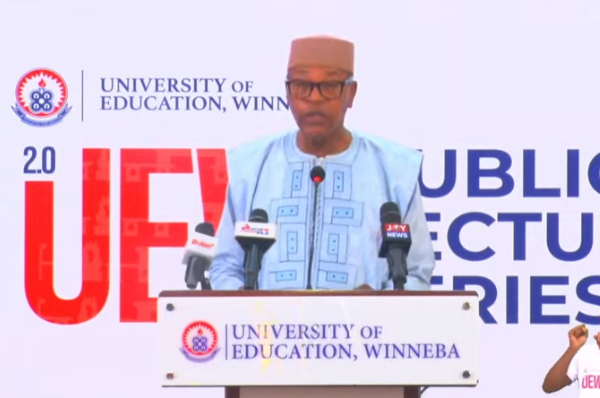

Veteran diplomat Mohamed Ibn Chambas has called for a fundamental shift in Ghana’s education system, urging policymakers and stakeholders to place greater value on skilled trades while nurturing resilient, adaptable learners for the future.
Speaking at a recent public forum, Ibn Chambas stressed that Ghana’s development hinges not only on academic excellence but also on practical skills that directly address the country’s socio-economic needs. He noted that for too long, the education system has prioritised white-collar pathways at the expense of technical and vocational training, leaving a gap in the skilled workforce.
According to him, elevating the status of skilled trades such as carpentry, welding, electrical work and other technical professions is essential to tackling unemployment and driving industrial growth. He emphasised that these trades should no longer be seen as second-tier options but as critical pillars of national development.
Ibn Chambas also highlighted the importance of building resilience among learners, particularly in an era marked by rapid technological change and global uncertainty. He explained that students must be equipped not only with knowledge but also with critical thinking skills, creativity, and the ability to adapt to evolving job markets.
He further called for stronger collaboration between educational institutions and industry players to ensure that training remains relevant and aligned with real-world demands. By fostering such partnerships, he said, graduates would be better prepared to transition into the workforce or create their own employment opportunities.
The seasoned diplomat urged government, educators and parents alike to support reforms that promote both academic and technical excellence. He concluded that a balanced and forward-looking education system would be key to building a more resilient and self-reliant Ghana.
