
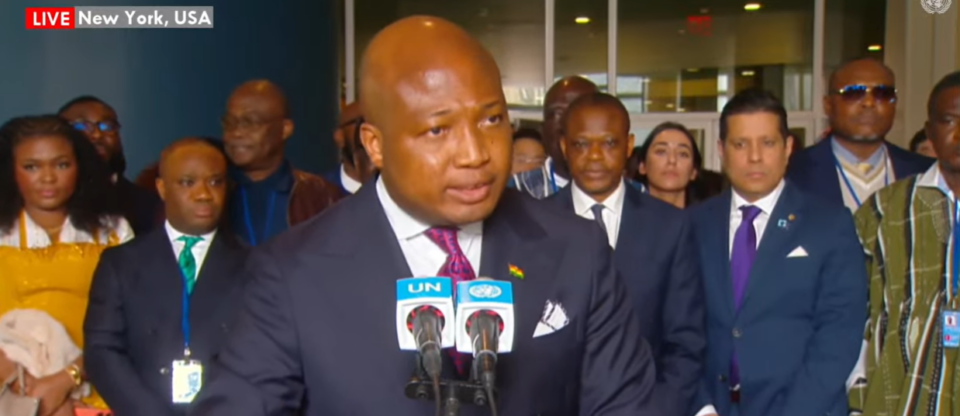

Ghana’s Minister for Foreign Affairs, , has said the adoption of a landmark United Nations resolution addressing the historical injustices of slavery and the transatlantic slave trade confirms that the global community is increasingly acknowledging a long-denied truth.
According to him, the resolution represents a major step forward in the international push for justice, recognition, and reparatory dialogue for people of African descent whose ancestors suffered centuries of exploitation and displacement.
Speaking after the development at the , Ablakwa noted that the decision signals a growing consensus among nations that the legacy of slavery must be confronted honestly and addressed through meaningful global cooperation.
He emphasized that for countries like , the resolution is more than a symbolic gesture. Instead, it affirms the lived history of millions of Africans and people of African descent across the world, whose ancestors were taken from the continent during the transatlantic slave trade.
“The world has finally spoken the truth,” Ablakwa stated, stressing that the resolution validates decades of advocacy by African states and civil society groups calling for formal recognition of the devastating impact of slavery and colonial exploitation.
The Foreign Affairs Minister explained that the resolution is expected to strengthen ongoing conversations around reparatory justice, historical accountability, and development partnerships aimed at addressing the enduring economic and social consequences of slavery.
He also commended the growing unity among African and Caribbean nations pushing the reparations agenda on the global stage. According to him, the outcome reflects years of diplomatic engagement and collective advocacy within the United Nations system.
Ablakwa reiterated that Ghana will continue to champion initiatives that promote historical justice, dignity, and opportunities for people of African descent worldwide. He noted that the country has consistently used international platforms to highlight the importance of acknowledging the past while building a more equitable future.
The minister further called on the international community to move beyond acknowledgment and work toward practical measures that can support affected communities and strengthen ties between Africa and the diaspora.
The United Nations resolution is widely seen as part of a broader global conversation on reparations and the lasting effects of slavery, a debate that has gained renewed attention in recent years as more countries and institutions reexamine their historical roles in the transatlantic slave trade.
Observers say the development could add momentum to efforts by African leaders and advocacy groups seeking justice and long-term development support linked to the historical exploitation of the continent.
For Ghana, Ablakwa stressed, the resolution reinforces the country’s long-standing commitment to preserving the memory of the transatlantic slave trade while pushing for a future grounded in fairness, respect, and shared prosperity.
Source
