
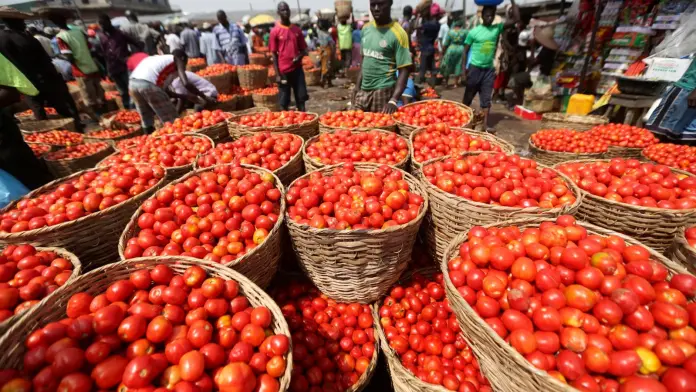

Ghanaian consumers may soon feel the effects of a decision by neighbouring Burkina Faso to suspend all exports of fresh tomatoes, a move that could tighten supply and drive up prices for one of West Africa’s most commonly used food staples.
The Peasant Farmers Association’s Executive Director, Bismark Nortey, warned on JoyNews Desk on 23 March that the ban — which took effect on 16 March 2026 — threatens to worsen food security and heighten costs for consumers in Ghana. He said Ghana’s heavy reliance on imports from Burkina Faso has left the country vulnerable, with more than 90 % of tomatoes consumed locally coming from across the border.
“When we fail to plan and anticipate, situations like this hit us hard,” Mr. Nortey said, pointing to Ghana’s long‑standing failure to build sufficient local production capacity. The sudden restriction, he explained, will reduce the availability of tomatoes in Ghanaian markets and intensify competition for limited local supplies — a dynamic likely to “definitely lead to high prices.”
The ban from Ouagadougou has prompted swift reactions from both government officials and industry groups. The Ghanaian government has initiated talks with authorities in Burkina Faso aimed at understanding the reasons behind the export suspension and seeking a mutually beneficial outcome. Officials said these engagements are meant to preserve longstanding cross‑border trade ties while clarifying the policy’s scope and duration.
Meanwhile, other agricultural stakeholders are calling for broader efforts to mitigate the fallout. The Vegetable Producers and Exporters Association of Ghana (VEPEAG) urged an urgent, coordinated response involving policymakers, farmers, and researchers to avoid significant disruption to the country’s vegetable supply chain. They stressed that the export ban underscores the structural risks of dependency on foreign supplies and highlighted the need to expand Ghana’s own tomato production.
The Burkina Faso government’s suspension of fresh tomato exports is part of a broader strategy to protect its domestic processing industry by ensuring sufficient raw material for local factories, according to official communiqués.
For Ghana — where tomatoes feature prominently in everyday cooking — the immediate effect may mean tighter markets and steeper prices in the coming months unless local production ramps up quickly or alternative sources of supply are found.
