
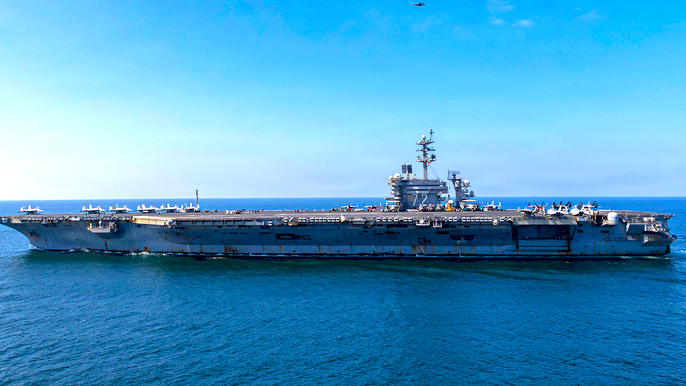

An expert has warned that missiles believed to be of Chinese origin and reportedly used by Iran against U.S. naval forces could dramatically alter the balance of power in a conflict, potentially triggering a rapid escalation in global tensions.
According to analysts cited in recent media reports, supersonic missiles launched toward the U.S. aircraft carrier USS Abraham Lincoln were assessed to be Chinese-made systems. The development has raised alarms among some security experts who say the involvement of advanced foreign weapons could significantly change the dynamics of the ongoing conflict in the region.
China has developed a range of anti-ship ballistic missiles designed to target large naval vessels, including aircraft carriers. Systems such as the DF-21D — sometimes referred to as a “carrier-killer” missile — are specifically built to strike moving carrier strike groups from long distances, highlighting the growing sophistication of modern naval warfare.
Fears of rapid escalation
Commentators say the possibility that Chinese-designed missiles could successfully strike or threaten a U.S. aircraft carrier would mark a major shift in the conflict almost immediately. Such a development could expand the war beyond the current theatre and intensify geopolitical rivalry between major powers.
Experts warn that if U.S. naval forces were significantly damaged by these weapons, the conflict could escalate quickly as Washington responds to protect its military assets and deter further attacks. Some analysts describe this scenario as a potential “overnight” change in the strategic landscape.
Wider war concerns
The warning comes amid an already volatile situation following recent U.S. military operations targeting Iran and subsequent retaliation in the region, which analysts say could develop into a prolonged and complex conflict.
Security observers note that the spread of advanced missile technology among U.S. adversaries has become a growing concern for Western defense planners. If such weapons are widely deployed or used successfully in combat, they could challenge the dominance of aircraft carriers — long considered a cornerstone of U.S. military power.
Strategic implications
Despite the concerns, many military officials argue that U.S. naval forces still possess advanced defenses, surveillance capabilities and layered missile-interception systems designed to counter threats. However, the evolving missile race and increasing cooperation among rival states could complicate the security environment in the years ahead.
Analysts say the situation underscores how quickly regional conflicts can evolve into broader geopolitical confrontations, particularly when advanced military technologies and major global powers are involved.
