
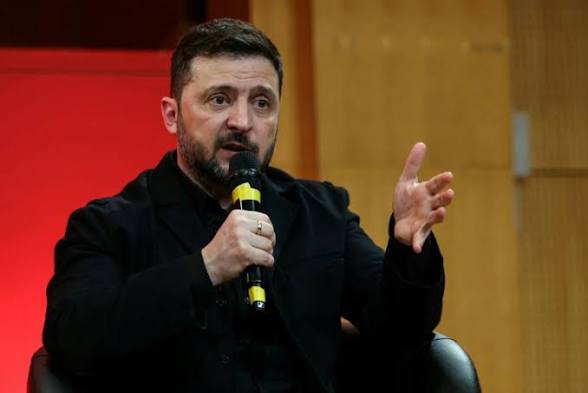

Ukrainian President Volodymyr Zelensky has accused some European Union allies of engaging in “blackmail” amid a growing dispute over the flow of Russian oil through a key pipeline that supplies several Central European countries.
The tensions centre on the Druzhba pipeline, one of the largest oil pipeline networks in the world, which transports crude oil from Russia to parts of Europe, including Hungary and Slovakia. The dispute escalated after Ukraine imposed restrictions on the transit of Russian oil linked to the sanctioned Russian energy giant Lukoil.
Kyiv says the measures are part of its broader strategy to curb Moscow’s ability to finance the war following the Russian invasion of Ukraine in 2022. However, the move has triggered criticism from some EU governments that still rely heavily on the pipeline for their oil supplies.
Speaking about the controversy, Zelensky argued that certain European leaders were attempting to pressure Ukraine into reversing the restrictions by linking the issue to other forms of support for Kyiv.
“We are hearing signals that look like blackmail,” Zelensky said, suggesting that some allies were using Ukraine’s dependence on European assistance as leverage in the dispute.
Officials in Hungary and Slovakia have been particularly vocal about the impact of the restrictions. Both countries have warned that limiting Russian oil deliveries through the pipeline could threaten their energy security and lead to rising fuel costs.
Hungarian Prime Minister Viktor Orbán has repeatedly criticised Ukraine’s decision and called on the European Union to intervene. Budapest argues that EU sanctions against Russia include exemptions that allow certain countries to continue importing oil via pipelines due to their lack of alternative supply routes.
Ukraine, however, insists that its actions are lawful and consistent with international sanctions aimed at weakening Russia’s war effort. Kyiv maintains that it cannot ignore the role of energy revenues in financing the Kremlin’s military operations.
The row highlights the delicate balance facing the European Union as it seeks to support Ukraine while also managing the energy needs of member states that remain dependent on Russian oil infrastructure.
Analysts say the dispute could further complicate relations within the EU bloc, where divisions over sanctions, military aid and energy policy have occasionally surfaced since the start of the war.
Despite the disagreement, Ukraine has reiterated its expectation that European partners will continue to stand united against Russia and support Kyiv’s defence and reconstruction efforts.
