
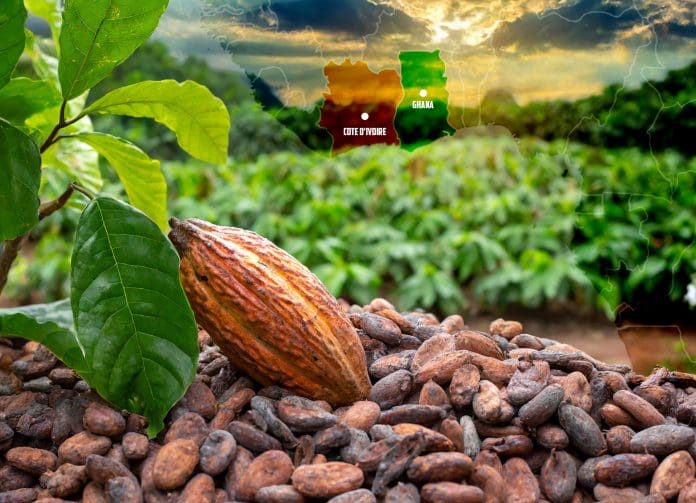

Cocoa farmers across West Africa, particularly in Ghana and Côte d’Ivoire, are facing severe financial hardship as the global chocolate market slows and cocoa prices decline, leaving many growers struggling to earn a living from their crops.
Although the price of chocolate products has increased in many parts of the world over the past year, the farmers who produce the key ingredient — cocoa beans — say they have seen little benefit. Instead, many are battling delayed payments, falling prices and growing uncertainty about the future of the industry.
For thousands of farming families, the situation has become desperate. Some farmers say they have not been paid for cocoa delivered months ago, making it difficult to cover basic expenses such as food, healthcare and education for their children. In rural communities where cocoa farming is often the main source of income, the economic pressure is being felt deeply.
One Ghanaian farmer, Akosua Frimpong, recounted how financial hardship affected her family after she was unable to pay for medical care when her husband fell ill. Without the expected income from cocoa sales, she said she could not afford hospital treatment, and he eventually died at home.
Market boom turns to slump
The current crisis follows a dramatic shift in the global cocoa market. In 2024, cocoa prices surged to record highs due to supply shortages and concerns about poor harvests. The sharp increase initially raised hopes among farmers that higher prices would translate into better earnings.
However, the situation has since reversed. Global cocoa prices have fallen significantly as improved harvests and weaker demand for chocolate combined to push the market downward. As prices dropped, cocoa beans from West Africa became too expensive for many international traders to purchase, leaving stocks unsold.
The slowdown in demand has been partly driven by the earlier spike in chocolate prices. Many manufacturers have responded by shrinking the size of chocolate bars, reducing cocoa content in products, or limiting production — all of which has lowered demand for raw cocoa beans.
Unsold beans and unpaid farmers
The decline in demand has led to large quantities of cocoa remaining unsold in warehouses across cocoa-producing regions. In both Ghana and Côte d’Ivoire, cooperatives and exporters say they are struggling to find buyers willing to pay profitable prices.
In some cases, truckloads of cocoa beans have remained stored for weeks, waiting for exporters to secure international buyers. This backlog has slowed the entire supply chain and delayed payments to farmers who have already harvested and delivered their crops.
In Ghana, the Ghana Cocoa Board (COCOBOD), which regulates the industry and sets the farmgate price for cocoa, has been forced to intervene to stabilise the sector. The board has reportedly stepped in to purchase unsold cocoa in an effort to prevent the market from collapsing.
However, the financial strain on the institution has also grown. The guaranteed price set earlier for farmers — around $5,300 per tonne — is now significantly higher than the prevailing world market price, creating a gap that has contributed to mounting debt for the cocoa regulator.
Price cuts deepen concerns
In an attempt to address the situation, authorities have reduced the guaranteed price paid to farmers to better reflect global market conditions. While this move is intended to encourage buyers and ease the marketing crisis, many farmers argue that the new price still does not cover their production costs.
Farmers say the cost of maintaining cocoa farms, purchasing fertilisers and hiring labour remains high. As a result, even with the revised prices, many growers fear they may not recover their investment for the season.
“Farm inputs and labour are expensive, and the new cocoa prices will affect us badly,” one long-time cocoa farmer said, warning that continued price cuts could force some farmers out of the industry.
Wider economic implications
The cocoa sector is a vital pillar of the economies of both Ghana and Côte d’Ivoire, which together produce roughly 70 percent of the world’s cocoa supply. In Ghana alone, cocoa accounts for about 7 percent of the country’s GDP and nearly 15 percent of export earnings.
Because of its importance to rural livelihoods, any disruption in the sector has far-reaching consequences. Hundreds of thousands of farming households depend on cocoa income, and prolonged financial difficulties could push farmers to abandon cocoa cultivation for other activities.
Some analysts warn that the ongoing slump could accelerate trends such as illegal mining or land leasing as farmers seek alternative ways to survive.
Calls for reforms
Industry stakeholders say the crisis highlights long-standing structural problems in the global cocoa supply chain, where farmers often earn only a small fraction of the profits generated by the multi-billion-dollar chocolate industry.
Governments in cocoa-producing countries are now exploring ways to strengthen the sector, including increasing local processing of cocoa beans into finished products rather than exporting raw beans.
For now, however, many farmers remain uncertain about when they will receive payment for their crops and whether cocoa farming can still provide a sustainable livelihood.
As the chocolate market continues to adjust to shifting global demand and fluctuating prices, West Africa’s cocoa farmers — the backbone of the industry — are bearing the heaviest burden of the downturn.
