
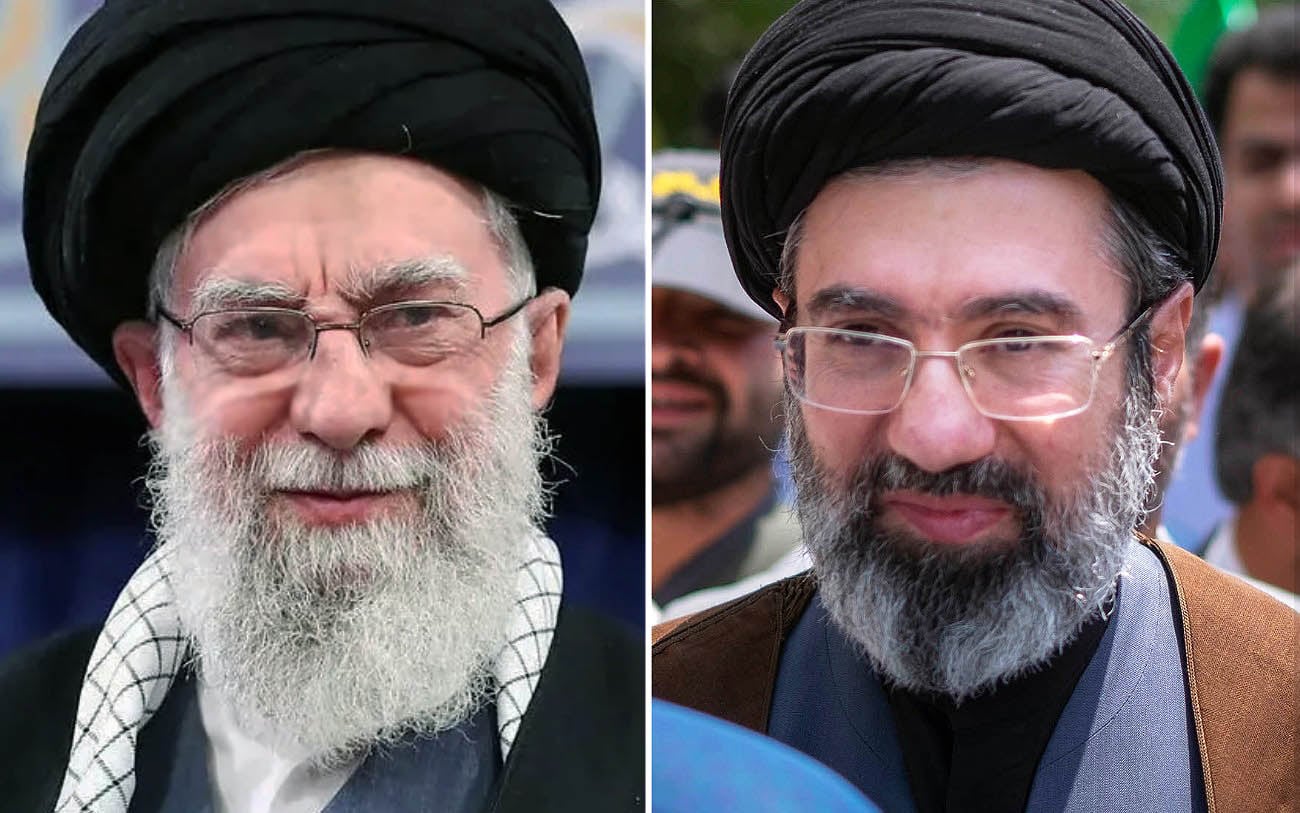

A senior Iranian cleric has indicated that Mojtaba Khamenei, the hardline son of Iran’s long-time leader Ali Khamenei, could be chosen as the next Supreme Leader of Iran, a development that may significantly shape the country’s political direction.
The remarks were made by Hosseinali Eshkevari, a member of the powerful Assembly of Experts, which is constitutionally mandated to appoint the country’s top authority. According to him, the body has already reached a decision regarding the next leader, hinting strongly that the position will remain within the Khamenei family.
In a video circulated by Iranian media, Eshkevari suggested that the clerical body had voted and that the outcome would soon be publicly announced. “The name of Khamenei will continue,” he said, signalling that Mojtaba Khamenei is widely expected to succeed his father in the powerful post.
The role of Supreme Leader in Iran is the most powerful position in the country’s political system. The office holds ultimate authority over the armed forces, the judiciary and major state policies, giving the leader decisive influence over both domestic governance and foreign policy.
Mojtaba Khamenei, a mid-ranking cleric believed to have strong ties with Iran’s influential Islamic Revolutionary Guard Corps, has long been viewed by analysts as a possible successor to his father. Although he has never held an elected political office, he has reportedly wielded significant influence behind the scenes within Iran’s political and security establishment.
His potential appointment has sparked debate both inside and outside Iran. Critics argue that transferring power from father to son could resemble a dynastic succession, something the 1979 Islamic Revolution sought to eliminate when it overthrew the monarchy of the Shah. Supporters within the clerical establishment, however, view the move as a way to preserve continuity and stability within the Islamic Republic during a turbulent period.
The development comes at a time of heightened regional tensions and conflict involving Iran, the United States and Israel, making the leadership transition particularly sensitive. Some Iranian officials have called for the swift selection of a new leader to ensure stability and effective governance during the ongoing crisis.
If formally confirmed, Mojtaba Khamenei would become only the third Supreme Leader since the establishment of the Islamic Republic in 1979. Analysts say his leadership could signal a continuation—or even intensification—of Iran’s hardline policies both domestically and internationally.
The Assembly of Experts, which consists of 88 clerics elected by the public, is expected to formally announce its decision once internal procedures are completed, bringing clarity to the question of who will lead the Islamic Republic at one of the most critical moments in its history.
