
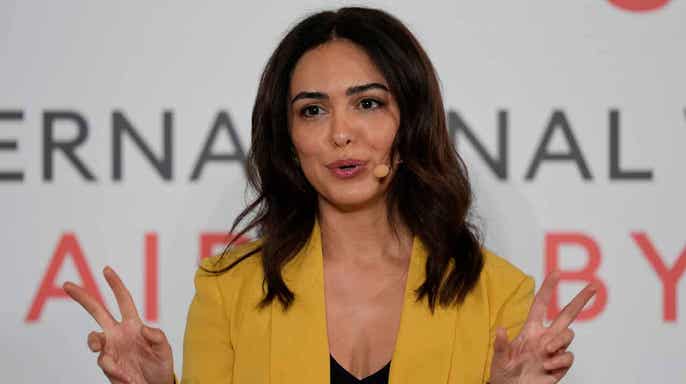

British-Iranian actress Nazanin Boniadi has publicly questioned the silence of Western university campuses over the actions of Iran’s ruling regime, asking why the wave of student activism seen on other global issues has not extended to protests against Tehran.
In a strongly worded social media post, Boniadi — known for her roles in film and television as well as her human rights advocacy — asked, “Where are the college campuses protesting the Iranian regime?” Her comment comes amid escalating tensions in the Middle East and renewed scrutiny of Iran’s internal policies and military activities.
The actress, who has long been outspoken about human rights issues in Iran, argued that the same energy seen in campus demonstrations on global conflicts should also be directed toward what she described as the repression of Iranian citizens. She pointed to the Iranian government’s crackdown on dissent, the imprisonment of activists and journalists, and restrictions on women’s rights.
Boniadi has been a prominent supporter of the “Woman, Life, Freedom” movement that gained international attention after the 2022 death of Mahsa Amini, a young Kurdish-Iranian woman who died in police custody after being detained by Iran’s morality police. The protests that followed spread across Iran and sparked solidarity demonstrations around the world.
In her latest remarks, Boniadi suggested that university students — often at the forefront of global protest movements — should also be speaking out against the Iranian authorities. She questioned why institutions that had hosted rallies and encampments over conflicts elsewhere appeared largely silent on the issue.
Her comments quickly generated debate online. Some users agreed with her call, saying that human rights abuses in Iran deserve greater global attention. Others argued that student activism tends to focus on issues where universities or their governments have direct involvement, which they say may explain the difference in scale of protests.
Boniadi, who was born in Tehran and raised in the United Kingdom, has become one of the most visible voices in the Iranian diaspora advocating for democratic reform and accountability in Iran. She has frequently spoken at international forums and has worked with human rights organisations to highlight the situation in the country.
The actress has previously urged Western governments to adopt stronger policies against Iranian officials responsible for human rights abuses, including sanctions and diplomatic pressure.
Her latest question about campus activism has reignited discussion about the role of students and universities in shaping international human rights discourse — and whether some global crises receive more attention than others.
