
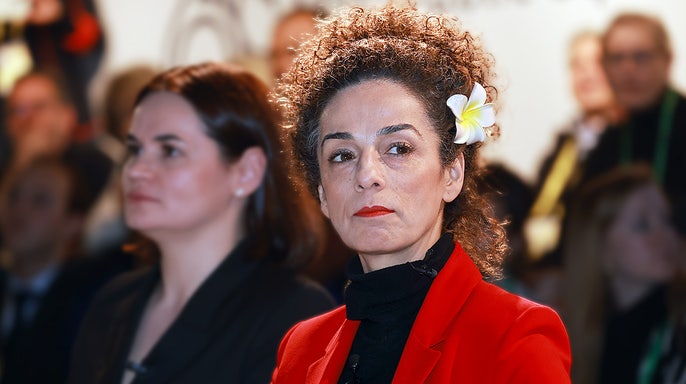

An Iranian journalist has called on former U.S. President Donald Trump to “finish the job” in dealing with Iran’s leadership, warning that many ordinary Iranians fear the consequences of what she described as a “wounded regime” growing more unpredictable and dangerous.
In an interview with international media, the journalist — who has been outspoken about human rights abuses and political repression in Iran — argued that partial military or political pressure could embolden hardliners within the Islamic Republic rather than weaken them. She said that when the regime feels threatened but remains in power, it often responds by tightening its grip domestically and lashing out abroad.
“Many Iranians are afraid of a wounded regime,” she said. “When it is cornered but not defeated, it becomes more repressive at home and more aggressive in the region.”
Her remarks come amid heightened tensions between Washington and Tehran, following recent U.S. and allied strikes targeting Iranian-linked military infrastructure. While the U.S. government has framed its actions as defensive and limited in scope, critics inside and outside Iran warn that the situation could spiral into a broader confrontation.
The journalist contended that sustained international pressure — whether through sanctions, diplomatic isolation, or other measures — is necessary to prevent the regime from regrouping and escalating its actions. She stressed, however, that any strategy should prioritize the safety and aspirations of the Iranian people, many of whom have faced economic hardship, political repression, and restrictions on civil liberties.
At the same time, her comments have sparked debate among analysts and activists. Some argue that calls to “finish the job” risk fueling further instability and could inadvertently harm civilians. Others say that a weakened regime might resort to harsher crackdowns against dissenters, journalists, and protesters.
Iranian authorities have consistently denounced foreign criticism as interference in the country’s internal affairs. Officials in Tehran maintain that external pressure strengthens national unity and resilience rather than undermines the state.
As tensions continue to simmer, the journalist’s remarks reflect a broader sentiment among segments of the Iranian diaspora and reform-minded citizens who believe that the current leadership’s confrontational policies have isolated the country and deepened domestic suffering.
Whether Washington chooses to escalate, de-escalate, or pursue renewed diplomatic engagement remains uncertain. For many Iranians watching events unfold, the greatest fear, as the journalist put it, is not only conflict itself — but the unpredictable consequences of a regime that feels cornered yet determined to survive at all costs.
