
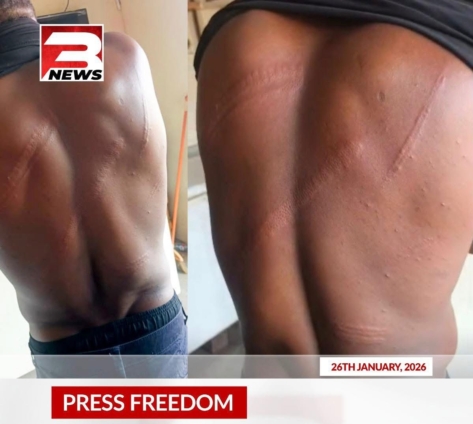

Former President John Dramani Mahama has addressed a human rights court, reaffirming Ghana’s commitment to democratic values, freedom of expression, and the protection of fundamental rights. However, his remarks have sparked renewed debate about the safety of journalists and media practitioners in the country.
Speaking at the session, Mahama underscored Ghana’s longstanding reputation as one of Africa’s most stable democracies, highlighting constitutional guarantees for free speech and a vibrant media landscape. He noted that successive governments have upheld press freedom as a cornerstone of democratic governance.
Yet, while Ghana continues to rank relatively high in regional press freedom assessments, concerns persist about the safety of journalists. Media watchdog groups have documented incidents of harassment, intimidation, physical assaults, and threats against reporters covering politically sensitive stories.
Critics argue that despite legal protections, enforcement remains inconsistent. Some journalists have reported being attacked while covering protests or investigative assignments, with limited follow-up or prosecution of perpetrators. Such incidents, they say, create a chilling effect that can discourage investigative reporting and accountability journalism.
Media advocacy organisations have also pointed to the need for stronger institutional support, including swift police response to threats against journalists and clearer protocols to safeguard reporters in the field.
Supporters of Mahama, however, contend that Ghana’s democratic institutions remain resilient and that isolated incidents should not overshadow broader progress. They stress that the country has not criminalised journalism and continues to host a plurality of media outlets operating freely.
The discussion comes at a time when press freedom is under strain in several parts of the world. Observers say Ghana’s ability to balance political contestation with media safety will be closely watched, particularly as the country navigates future electoral cycles.
As Mahama’s remarks echo through legal and political circles, the central question remains: beyond constitutional assurances, what more can be done to ensure that journalists in Ghana can work without fear?
Advocates insist that safeguarding the media is not only about protecting individual reporters but about strengthening democracy itself.
