
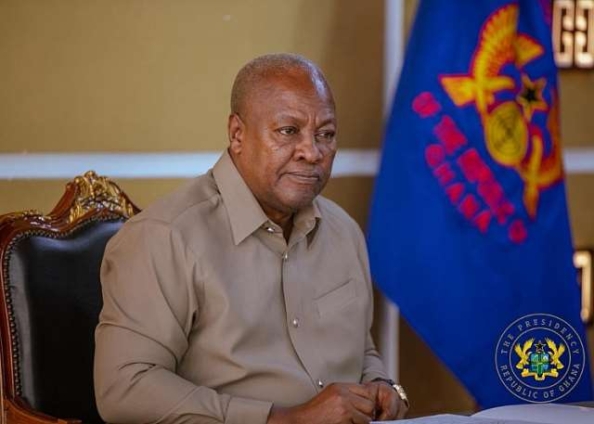

Former President John Dramani Mahama has stressed that while economic stabilisation is necessary, it is not sufficient to transform Ghana’s economy, insisting that the country must move beyond short-term fiscal fixes to pursue deep structural reforms that drive inclusive and sustainable growth.
Speaking at a public policy forum in Accra, Mr. Mahama argued that stabilisation measures such as inflation control, exchange rate management, and fiscal consolidation may restore macroeconomic balance, but they do not automatically translate into long-term economic transformation or improved living standards for ordinary Ghanaians.
According to him, Ghana’s recurring economic challenges stem from structural weaknesses that require bold and deliberate interventions rather than temporary corrective policies.
Stabilisation Is Only the First Step
Mr. Mahama explained that stabilisation programmes often focus on restoring confidence in the economy, reducing budget deficits, and meeting international financial obligations. However, he warned that without parallel investments in productive sectors, industrialisation, and value addition, the economy risks returning to cycles of instability.
“Stabilisation alone will not transform our economy,” he stated. “We must prioritise policies that expand production, create decent jobs, and strengthen local industries.”
He noted that Ghana’s heavy dependence on raw material exports and imports of finished goods continues to expose the country to external shocks, currency volatility, and global price fluctuations.
Call for Structural Reforms
The former president emphasised the need for structural reforms in agriculture, manufacturing, energy, and education to reposition the economy for long-term growth. He advocated increased support for agribusiness, small and medium-sized enterprises (SMEs), and local manufacturing firms to reduce import dependency.
He further highlighted the importance of building resilient supply chains, investing in skills development, and promoting technological innovation as critical pillars of transformation.
Mr. Mahama argued that economic transformation must be deliberate and anchored on a clear national development strategy that transcends political cycles.
Job Creation and Inclusive Growth
Touching on unemployment, particularly among the youth, Mr. Mahama said stabilisation policies must be complemented by targeted job creation programmes. He stressed that true economic recovery should reflect in household incomes, improved public services, and expanded opportunities for young people.
He reiterated his commitment to policies that support entrepreneurship and expand access to credit for businesses, noting that private sector growth remains central to sustainable development.
Balancing Fiscal Discipline with Growth
While acknowledging the importance of fiscal discipline, Mr. Mahama cautioned against excessive austerity measures that could stifle growth and worsen hardship. He called for a balanced approach that protects vulnerable groups while maintaining macroeconomic stability.
According to him, Ghana’s economic future depends on its ability to combine prudent financial management with transformative investments that build productive capacity.
A Broader Vision for Economic Transformation
Mr. Mahama concluded by urging policymakers to adopt a long-term vision focused on industrialisation, digital transformation, and regional trade expansion. He maintained that Ghana cannot rely solely on stabilisation programmes but must pursue comprehensive reforms that fundamentally reshape the structure of the economy.
“Stability is important,” he said, “but transformation is what secures prosperity.”
His remarks come amid ongoing national discussions about economic recovery strategies and the need for sustainable pathways to growth.
