
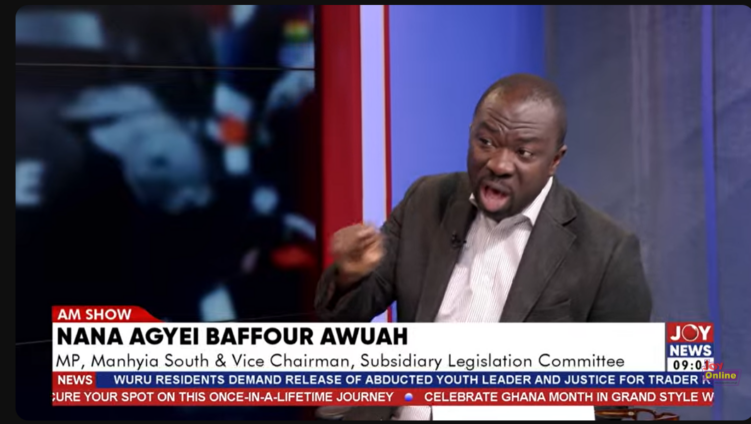

Former Member of Parliament for Manhyia South, Matthew Opoku Prempeh’s close ally and New Patriotic Party (NPP) stalwart, Baffour Awuah, has criticised the proposed 24-hour economy policy, arguing that it fails to address the real causes of unemployment in Ghana.
According to the former MP for Manhyia North, the concept of a 24-hour economy, which has been promoted by the opposition National Democratic Congress (NDC), misdiagnoses the country’s employment challenges and risks creating unrealistic expectations among young people.
Speaking in a recent interview, Awuah said unemployment in Ghana is largely driven by structural issues such as limited industrialisation, inadequate skills training, and the slow growth of the private sector rather than the number of hours businesses operate.
“The idea that simply extending business hours to 24 hours will automatically create jobs is misleading. Employment is created when industries expand, when businesses have access to capital, and when productivity increases,” he said.
The 24-hour economy proposal has been championed by former President John Dramani Mahama as part of his broader economic agenda aimed at boosting productivity, increasing exports, and creating employment opportunities across various sectors.
However, Awuah argued that the policy does not sufficiently consider the economic conditions required to sustain round-the-clock operations, including reliable electricity supply, security, transportation, and market demand.
He noted that many businesses in Ghana already struggle to remain profitable within standard working hours due to high operational costs, including taxes, utilities, and logistics challenges.
“If companies are barely surviving operating eight to ten hours a day, asking them to operate 24 hours without addressing the cost of doing business will not solve unemployment,” he said.
Awuah also stressed that the focus should instead be on strengthening manufacturing, agriculture, and small and medium-sized enterprises (SMEs), which he said have the greatest potential to generate sustainable jobs.
He urged policymakers to prioritise policies that encourage investment, improve infrastructure, and expand vocational and technical education to equip young people with practical skills.
The debate over the 24-hour economy policy has intensified in recent months, with supporters arguing that it could stimulate economic growth by increasing productivity and maximising the use of infrastructure and facilities.
Critics, however, maintain that without a strong industrial base and adequate support systems, the policy may struggle to deliver the employment outcomes being promised.
As discussions continue, analysts say the effectiveness of any employment strategy will depend largely on broader economic reforms that stimulate production, investment, and innovation across key sectors of the economy.
